Experienced Divorce Lawyer Kolkata in Kolkata
Advocate Panchanand Shaw provides expert legal representation for clients in Kolkata. With extensive experience at the Calcutta High Court and district courts across West Bengal, he delivers decisive legal solutions tailored to your needs.
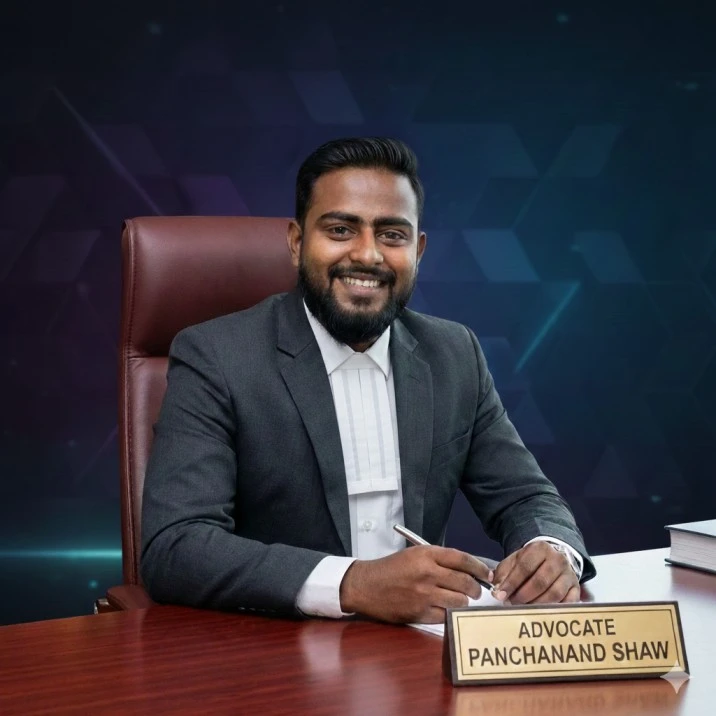
Going through a divorce is one of life’s most challenging experiences. The emotional toll, combined with complex legal procedures, can feel overwhelming. As a compassionate divorce lawyer in Kolkata, Advocate Panchanand Shaw provides not just legal expertise but also the understanding and support you need.
Understanding Divorce Laws in India
Divorce laws vary based on personal law. Hindus are governed by the Hindu Marriage Act, 1955; Muslims by Muslim personal law; Christians by the Indian Divorce Act, 1869; and inter-faith marriages by the Special Marriage Act, 1954.
Types of Divorce in Kolkata
Mutual Consent Divorce: The simplest and fastest way when both parties agree on all terms. The cooling-off period of 6 months can be waived in certain cases.
Contested Divorce: When one party does not agree, the other must prove specific grounds recognized by law.
Grounds for Divorce Under the Hindu Marriage Act, 1955
Grounds include adultery, cruelty, desertion, conversion, mental disorder, leprosy, venereal disease, renunciation, presumption of death, and failure to restore conjugal rights.
Mutual Consent Divorce Process in Kolkata
The process involves filing the first motion, recording statements of both parties, the cooling-off period, and the second motion after which the court passes the decree of divorce.
Contested Divorce Proceedings
In a contested divorce, the petition is filed, notice is served, reconciliation is attempted, evidence is recorded, and the court delivers its judgment.
Alimony and Maintenance in Kolkata
Alimony can be claimed under Section 25 of the Hindu Marriage Act, Section 125 CrPC, and the Domestic Violence Act. The amount depends on income, standard of living, marriage duration, and children’s needs.
Why Choose Advocate Panchanand Shaw as Your Divorce Lawyer in Kolkata
We provide compassionate support while aggressively protecting your legal rights. Our mediation expertise helps resolve many cases through constructive dialogue before resorting to litigation.
Divorce proceedings in Kolkata are conducted before the Family Courts located at Bhowanipore, which have exclusive jurisdiction over matrimonial matters within the city. The Family Court follows a less formal procedure compared to regular civil courts, with an emphasis on conciliation and settlement.
Filing the Petition: The divorce petition must be filed in the Family Court within whose jurisdiction the marriage was solemnized, or where the parties last resided together, or where the respondent resides. The petition must contain all material facts, including the date of marriage, the names and ages of children (if any), the grounds on which divorce is sought, and details of the property and income of the parties.
Conciliation Attempts: Upon receiving the petition, the Family Court may refer the matter to a conciliator or counselor to explore the possibility of reconciliation. This is a unique feature of family law proceedings that distinguishes them from other civil litigation. The court may also refer the parties to mediation centers affiliated with the Calcutta High Court.
Trial and Evidence: If reconciliation fails, the case proceeds to trial. Both parties present evidence through affidavits and oral testimony. The Family Court has the discretion to depart from the strict rules of evidence and may call for reports from counselors or welfare officers.
Interim Orders: During the pendency of the divorce proceedings, the court can pass interim orders for maintenance (Section 24 of the Hindu Marriage Act), child custody, and visitation rights. These interim orders remain in force until the final disposal of the case.
The division of matrimonial property is one of the most contentious aspects of divorce. Unfortunately, India does not have a comprehensive matrimonial property law like many Western countries. However, courts in Kolkata have developed principles for the division of property acquired during the marriage.
Separate Property vs. Matrimonial Property: Property acquired by either spouse before marriage or through inheritance or gift after marriage is generally considered separate property and is not subject to division. Property acquired jointly during the marriage is considered matrimonial property and can be divided.
Financial Contributions: Courts consider both direct financial contributions and indirect contributions (such as homemaking, child-rearing, and supporting the other spouse's career) when determining the division of assets. In several judgments, including the landmark case of Sharda v. Dharmpal (2003), the Supreme Court has recognized the value of non-financial contributions.
Str Idiopathy (Streedhan): Under Hindu law, stridhan (gifts and property given to a woman at the time of marriage or thereafter) remains her exclusive property and cannot be claimed by the husband or his family. Our firm has successfully helped numerous women recover their stridhan from their husbands after separation.
Kolkata has a significant NRI population, and cross-border divorce cases are increasingly common. These cases involve complex issues of jurisdiction, recognition of foreign decrees, and enforcement of orders across borders.
Jurisdictional Issues: Indian courts can entertain divorce petitions if the marriage was solemnized in India, if the parties last resided together in India, or if the respondent resides in India. For NRIs residing abroad, the court may exercise jurisdiction based on the petitioner's domicile or residence in India.
Foreign Divorce Decrees: Under Section 13 of the Code of Civil Procedure, foreign divorce decrees are recognized in India if they were passed by a competent court, on merits, and in accordance with natural justice. However, if the foreign decree was obtained by fraud or without proper notice to the other party, it may not be recognized.
Child Custody in Cross-Border Cases: Custody disputes involving NRIs are particularly challenging. Indian courts generally apply the principle of the child's welfare, but enforcement of custody orders across borders requires international cooperation under conventions like the Hague Convention on the Civil Aspects of International Child Abduction.
Need Legal Assistance in Kolkata?
Contact Advocate Panchanand Shaw today for a confidential consultation. Our chamber is located at 14 Hare Street, Kolkata — steps from the Calcutta High Court.
Quick Consultation
Office Address
14 Hare Street,
Kolkata - 700001
West Bengal, India
Protection of Women from Domestic Violence Act, 2005
The Protection of Women from Domestic Violence Act, 2005 (DV Act) is a comprehensive legislation that protects women from various forms of domestic violence, including physical, emotional, sexual, verbal, and economic abuse. The Act provides for protection orders, residence orders, monetary relief, custody orders, and compensation. Importantly, the DV Act applies to women in live-in relationships as well as married women.
Under the DV Act, a woman can approach the Magistrate for relief if she has been subjected to domestic violence by any adult male member of the household. The Act has a broad definition of “domestic relationship” covering relationships of marriage, adoption, and family connections, as well as relationships in the nature of marriage (live-in relationships).
The remedies available under the DV Act are in addition to, and not in substitution of, remedies available under other laws. A woman can simultaneously pursue proceedings under the DV Act, Section 125 CrPC for maintenance, and Section 498A IPC for dowry harassment. We advise women on the most effective combination of remedies based on their specific circumstances.
Mediation and Alternative Dispute Resolution in Family Matters
Mediation has emerged as an effective alternative to litigation in family disputes. The Family Court Act, 1984 encourages the use of mediation for the resolution of matrimonial disputes. The Calcutta High Court has established a Mediation and Conciliation Centre at the High Court premises, where trained mediators help parties reach mutually acceptable solutions.
The advantages of mediation in family disputes are numerous. Mediation is less adversarial than court proceedings, which helps preserve family relationships, especially when children are involved. It is faster and less expensive than litigation. It allows the parties to craft creative solutions that meet their specific needs, rather than being bound by standardized court orders. And it is confidential, protecting the privacy of the family.
As a divorce lawyer in Kolkata, we are strong advocates of mediation and have helped numerous couples resolve their differences through this process. However, we also recognize that mediation is not appropriate in all cases, particularly when there is a history of domestic violence or when one party is not negotiating in good faith.
Frequently Asked Questions
Common questions about this legal service in Kolkata
How long does a mutual consent divorce take in Kolkata?
+Can I get divorced without my spouse’s consent in Kolkata?
+How is alimony calculated in Kolkata?
+What documents are needed for filing divorce in Kolkata?
+Do I need to appear in court personally for divorce?
+Get in Touch with Advocate Panchanand Shaw
Located at 14 Hare Street, Kolkata — providing trusted legal services to clients across West Bengal. Call or WhatsApp for an appointment.
14 Hare Street, Kolkata - 700001 | panchanand.com