Experienced Family Lawyer Kolkata in Kolkata
Advocate Panchanand Shaw provides expert legal representation for clients in Kolkata. With extensive experience at the Calcutta High Court and district courts across West Bengal, he delivers decisive legal solutions tailored to your needs.
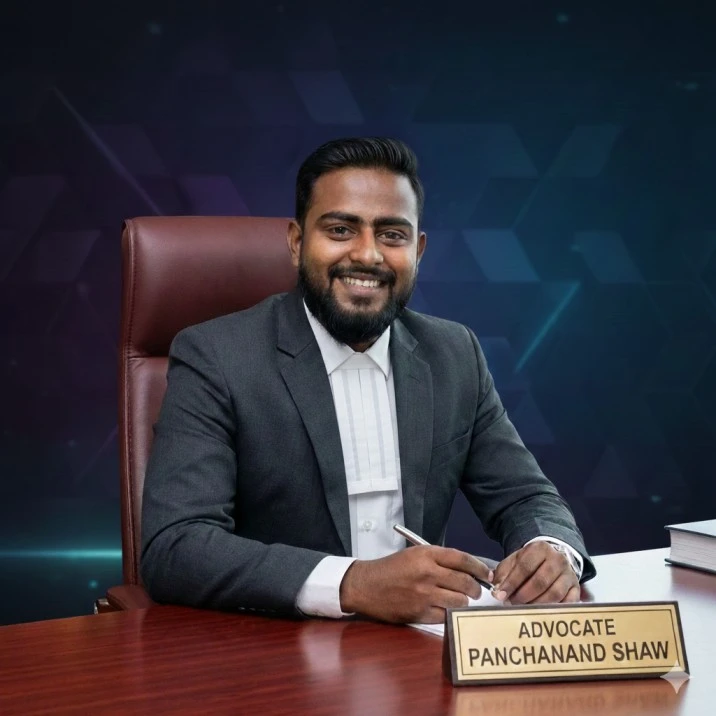
Family disputes are among the most sensitive and emotionally charged legal matters. Whether you are going through a divorce, fighting for child custody, seeking protection from domestic violence, or dealing with inheritance issues, you need a family lawyer who combines legal expertise with genuine compassion.
Why You Need a Family Lawyer in Kolkata
Family law encompasses divorce, child custody, maintenance, domestic violence, and inheritance. Given the emotional stakes, having a skilled family lawyer in Kolkata makes a significant difference.
Family Law Services We Offer in Kolkata
Divorce and Separation
We handle mutual consent divorce, contested divorce, judicial separation, and restitution of conjugal rights under all personal laws.
Child Custody and Guardianship
The welfare of the child is paramount. We handle custody disputes, visitation rights, and guardianship applications.
Domestic Violence Cases
Under the Protection of Women from Domestic Violence Act, 2005, victims can seek protection orders, residence orders, and monetary relief.
Maintenance and Alimony
We assist clients in claiming or defending maintenance claims under Section 125 CrPC and various personal laws.
Inheritance and Succession
We help clients navigate succession under the Hindu Succession Act and Indian Succession Act.
Child Custody and Guardianship
Factors considered include the child’s age, health, educational needs, financial capacity of each parent, the child’s wishes, and the ability to provide a stable environment.
Why Choose Advocate Panchanand Shaw as Your Family Lawyer in Kolkata
We offer empathetic approach, comprehensive knowledge of all family law systems, mediation skills, and strong courtroom presence.
Section 125 of the Code of Criminal Procedure provides a swift remedy for wives, children, and parents who are unable to maintain themselves. The provision is secular in nature and applies to persons of all religions. The objective of Section 125 is to prevent vagrancy and destitution by compelling those who have the means to support their dependents to do so.
Who Can Claim Maintenance: A wife (including a divorced wife who has not remarried), legitimate or illegitimate minor children, adult children with physical or mental disabilities, and parents who are unable to maintain themselves can claim maintenance under Section 125.
Quantum of Maintenance: The amount of maintenance is determined based on the income of the respondent, the needs of the claimant, and the standard of living of the parties. There is no fixed formula — the court has discretion to award an amount that ensures the claimant can live with dignity.
Interim Maintenance: During the pendency of the maintenance application, the court can award interim maintenance to ensure that the claimant does not suffer hardship. The application for interim maintenance is typically decided within 60 days.
Enforcement of Maintenance Orders: If the respondent defaults on maintenance payments, the court can recover the arrears as a fine and may even sentence the defaulter to imprisonment for up to one month for each month of default.
The Hindu Succession Act, 1956 governs the inheritance of property for Hindus. The Act was amended in 2005 to grant daughters equal rights to ancestral property. This landmark amendment made daughters coparceners by birth, giving them the same rights and liabilities as sons in ancestral property.
The Supreme Court, in the case of Vineeta Sharma v. Rakesh Sharma (2020), clarified that the 2005 amendment is retrospective in nature and applies to all daughters, regardless of when they were born. This means that daughters can claim their share in ancestral property even if the father died before the amendment was passed.
In West Bengal, the amendment has led to a significant increase in property disputes as women assert their inheritance rights. As a family lawyer in Kolkata, we represent women seeking their rightful share in ancestral property and help families navigate the complexities of succession planning.
Guardianship and adoption are important aspects of family law that deal with the care and custody of children. The legal framework for guardianship is provided by the Guardians and Wards Act, 1890, while adoption for Hindus is governed by the Hindu Adoption and Maintenance Act, 1956. For inter-country adoption and adoptions by non-Hindus, the Juvenile Justice (Care and Protection of Children) Act, 2015 applies.
Natural Guardians: Under Hindu law, the father is the natural guardian of a minor child, followed by the mother. However, the Supreme Court has held that the mother is equally entitled to be the natural guardian, and the welfare of the child is the paramount consideration in custody disputes.
Testamentary Guardians: A parent can appoint a guardian for their minor children through a will. The appointed guardian has the same powers as a natural guardian but must act in the best interests of the child.
Adoption Procedure: Adoption in India is a regulated process. Prospective adoptive parents must register with the Central Adoption Resource Authority (CARA) and complete the home study process before being matched with a child.
Need Legal Assistance in Kolkata?
Contact Advocate Panchanand Shaw today for a confidential consultation. Our chamber is located at 14 Hare Street, Kolkata — steps from the Calcutta High Court.
Quick Consultation
Office Address
14 Hare Street,
Kolkata - 700001
West Bengal, India
Live-In Relationships and Legal Rights
Live-in relationships have gained significant recognition in Indian law over the past decade. The Supreme Court, in several landmark judgments, has held that live-in relationships fall within the ambit of Article 21 of the Constitution (right to life and personal liberty). The Protection of Women from Domestic Violence Act, 2005 specifically includes relationships “in the nature of marriage” within its scope.
While live-in relationships are not regulated as extensively as marriages, certain legal rights and obligations arise from them. A woman in a live-in relationship is entitled to protection from domestic violence under the DV Act. Children born from live-in relationships are legitimate and entitled to inheritance rights from their parents.
However, a live-in relationship does not confer the same rights as marriage. There is no presumption of marriage from a long-term live-in relationship, though prolonged cohabitation may lead to such a presumption in certain circumstances. Parties in a live-in relationship do not have the right to spousal maintenance or inheritance from each other unless specific agreements are in place.
Prenuptial and Postnuptial Agreements in India
Prenuptial agreements (agreements entered into before marriage) and postnuptial agreements (agreements entered into after marriage) are not specifically recognized under Indian law. However, the courts have increasingly recognized the validity of such agreements if they are entered into voluntarily and their terms are not contrary to public policy.
In several cases, the Calcutta High Court and other High Courts have held that prenuptial agreements are not illegal per se but must be examined on their merits. The courts have drawn a distinction between agreements that seek to regulate the terms of marriage (which are valid) and agreements that seek to facilitate divorce (which may be against public policy).
A well-drafted prenuptial agreement can cover financial arrangements, division of property, spousal maintenance, and other matters. However, agreements that purport to oust the jurisdiction of the court in matters of child custody or that waive the right to maintenance entirely may be set aside.
Frequently Asked Questions
Common questions about this legal service in Kolkata
What is the difference between legal separation and divorce in India?
+Can grandparents claim custody of a child in Kolkata?
+How is maintenance amount calculated in Kolkata?
+What is the procedure for filing a domestic violence case in Kolkata?
+Can a family law case be settled outside court?
+Get in Touch with Advocate Panchanand Shaw
Located at 14 Hare Street, Kolkata — providing trusted legal services to clients across West Bengal. Call or WhatsApp for an appointment.
14 Hare Street, Kolkata - 700001 | panchanand.com